




A Window, a Kettle, and Nothing to Fix
Everyday Stillness | October 1, 2026

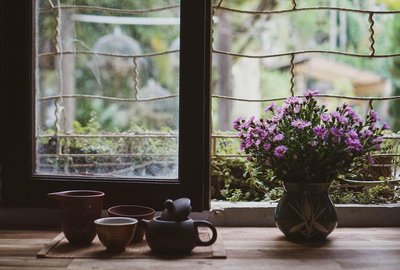
There is a particular kind of peace that arrives when you are standing at the kitchen window waiting for water to boil. Nothing is happening. Nothing needs to happen. The kettle is doing its slow work, the window is doing its quiet work, and you are simply there, watching a tree or a street or a patch of grey sky. It is not meditation, exactly. It is not rest, exactly. It is something closer to permission — permission to be unproductive for three whole minutes.
We are not used to this. Most of us treat waiting as a problem to be solved with a screen. The kettle takes two minutes? That is two minutes of email. The bus is late? That is a podcast. We have filled every crack in the day with input, and then we wonder why we feel so tired despite never having done anything especially hard.
The Case for Doing Less Than You Could
Doing nothing is not the same as wasting time. When the hands are idle and the eyes are soft, the mind begins to wander in a way it rarely gets to otherwise. Thoughts surface that were buried under tasks. Small feelings get felt. The nervous system, which has been braced all day against a hundred tiny urgencies, finally loosens its grip.
You do not need a meditation cushion for this. You need a window and a kettle. You need to resist the reflex to reach for your phone. You need to let the water take as long as it takes, and let yourself take just as long. If a thought comes, let it come. If nothing comes, even better. The point is not to achieve a state. The point is to stop achieving, just for a moment, and see what remains.
Nothing to Fix, Nowhere to Be
There is a phrase that shows up in contemplative traditions in one form or another: nothing to fix, nowhere to be. It sounds almost too simple to be useful. But sit with it for a minute, really sit with it, and you may notice how much of your day is spent operating under the opposite assumption — that something is broken and you must repair it, that somewhere else is where you ought to be.
The kettle does not believe any of this. It heats. It sings. It clicks off. It has no opinion about whether you are behind on your emails or whether you should have said something different at dinner last night. It simply does its small job, in its small way, in its small time. There is a lesson in that, and it is not a heavy one. It is the lightest possible lesson: that most moments do not require anything from us at all, and that being present for them is its own quiet reward.
So tomorrow morning, when the water goes on, try staying with it. Watch the steam gather on the glass. Listen to the sound the kettle makes just before it boils. Let the day start a little slower than it wants to. The emails will wait. They always do. This moment, on the other hand, will not come again.


Teacup Thinking

The first cup wakes you up; the second one is where the real conversation with yourself begins.